The 60-second gist
A concise gist has not been published for this essay yet.
Thesis
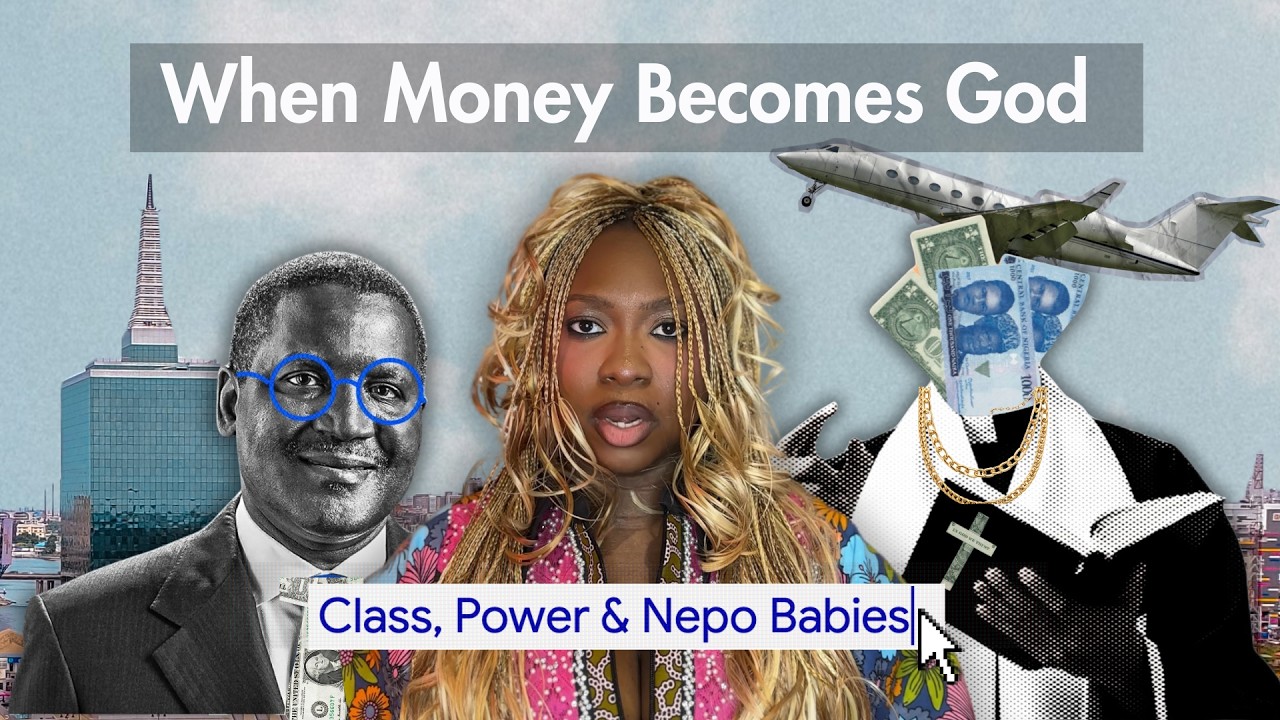
In a society where money takes on a god-like, mysterious quality, it becomes an object either demonised or worshipped — this essay examines class, wealth-worship culture, and "nepo babies" in Nigeria, using comparative country case studies to show how capitalism produces an obsessive culture around money and luxury.
Chapters
Framing the essay: why money in Nigeria is treated as something closer to a deity than a tool.
Unpacking the popular claim that Nigeria has no class system, and what that claim conceals.
How status is signalled through cheap approximations of luxury, and what that reveals about aspiration.
Money treated as an unknowable force — either demonised or worshipped — rather than a social relation.
Who the label actually describes, and how inherited access hides behind the language of hard work.
Transcript
Concepts
Status goods whose signalling power exceeds their material worth — luxury as a performance affordable in fragments.
Treating wealth as an unknowable, quasi-spiritual force rather than the outcome of social and economic arrangements — which makes it easy to worship and hard to question.
Someone whose access to opportunity is inherited through family position, while the story told about their success is one of individual effort.
The breaking of goods and aspirations into the smallest purchasable unit, so that participation in a lifestyle is always just affordable and never complete.
Sources
- Distinction: A Social Critique of the Judgement of Taste
Pierre Bourdieu
- The Theory of the Leisure Class
Thorstein Veblen
- Capital in the Twenty-First Century
Thomas Piketty